
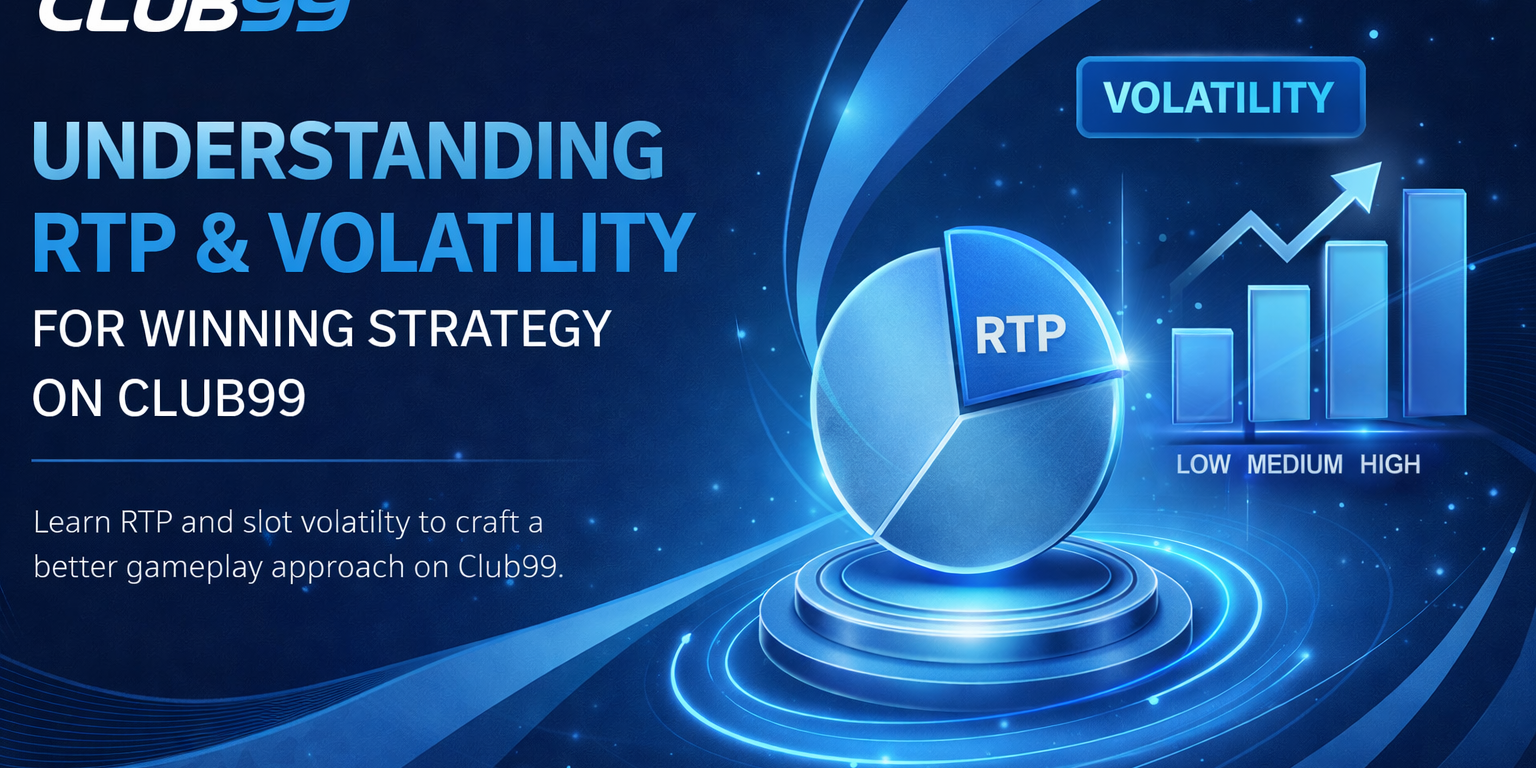
When it comes to online casino games, especially slot-based gameplay, many players focus purely on visuals, bonuses, or jackpots. However, experienced players understand that real performance and expectations are shaped by two key concepts: Return to Player (RTP) and volatility.
On Club99, understanding these mechanics can significantly improve how you approach games, manage your balance, and set realistic expectations. This guide breaks down RTP and volatility in a clear and practical way so you can make more informed decisions while playing.
What is RTP (Return to Player)?
RTP, or Return to Player, refers to the percentage of total wagers that a game is designed to return to players over time. It is a theoretical value calculated across a large number of game rounds.
For example, if a game has an RTP of 96%, it means that over the long term, the game is expected to return 96 units for every 100 units wagered. The remaining percentage represents the platform margin.
It is important to understand that RTP does not guarantee short-term results. Individual sessions can vary significantly due to randomness.
Why RTP Matters for Players
RTP helps players estimate the long-term behavior of a game. While it does not predict immediate outcomes, it provides a useful benchmark when comparing different games.
Higher RTP games generally offer more consistent returns over time, making them attractive to players who prefer longer gameplay sessions. Lower RTP games may offer larger payouts but often come with higher risk.
On Club99, players can explore a wide range of games with varying RTP levels, allowing them to choose based on their preferred playing style.
What is Volatility?
Volatility, also known as variance, describes how frequently and how much a game pays out. It determines the risk level associated with a particular game.
There are generally three types of volatility:
Low volatility: Frequent but smaller wins
Medium volatility: Balanced frequency and payout size
High volatility: Less frequent wins but potentially larger payouts
Understanding volatility helps players align their expectations with the type of experience they are looking for.
How RTP and Volatility Work Together
RTP and volatility are often misunderstood as interchangeable, but they serve different purposes. RTP reflects the long-term return, while volatility describes the short-term behavior of the game.
For example, two games may have the same RTP but very different volatility levels. One may provide steady small wins, while the other offers rare but significant payouts.
This combination is what shapes the overall gameplay experience on Club99.
Choosing the Right Game Based on Your Strategy
Different players have different goals. Some prefer extended gameplay sessions, while others enjoy the excitement of chasing larger wins.
If your goal is longer playtime, low to medium volatility games with stable RTP may be more suitable. These games tend to provide more frequent payouts, helping maintain your balance over time.
If you prefer higher-risk gameplay with the potential for bigger rewards, high volatility games may be more appealing. However, these games often require better balance management due to less frequent wins.
Managing Expectations and Bankroll
Understanding RTP and volatility also helps players manage their bankroll more effectively. Knowing the nature of a game allows you to plan how much to play and how long you can sustain your session.
Setting limits before starting a session is a good practice. This helps maintain control and ensures that gameplay remains enjoyable rather than stressful.
On Club99, players are encouraged to approach gameplay with awareness and discipline to maximize their experience.
Common Misconceptions About RTP and Volatility
One of the most common misunderstandings is that a high RTP guarantees consistent winnings. In reality, RTP is calculated over a very large number of spins, not individual sessions.
Another misconception is that games can become “due” for a win. Modern games use Random Number Generator (RNG) systems, meaning each outcome is independent and unaffected by previous results.
Recognizing these facts helps players avoid unrealistic expectations.
Why Understanding Game Mechanics Improves Your Experience
Players who understand RTP and volatility tend to have a more structured and enjoyable gaming experience. Instead of relying on guesswork, they make decisions based on how games are designed to behave.
This leads to better session planning, improved balance management, and a more controlled approach to gameplay.
Play Smarter with Club99
Club99 provides a wide variety of games designed to suit different player preferences. By understanding key concepts like RTP and volatility, you can choose games that match your strategy and expectations.
Take the time to explore different game types, understand their mechanics, and play with a clear plan. A well-informed approach leads to a more enjoyable and rewarding experience on Club99.